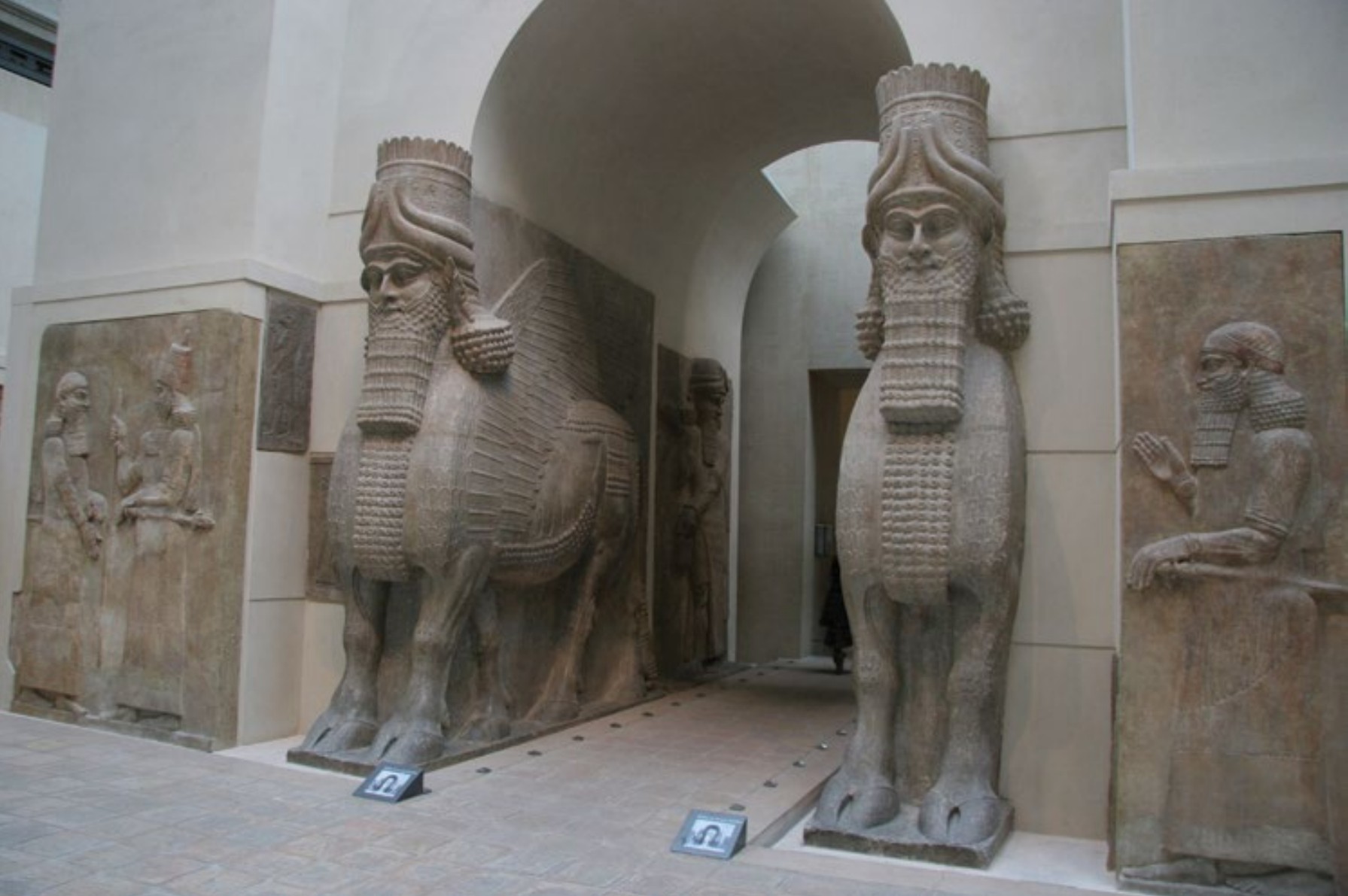
 Lamassu © Album/Art Resource, NY
Lamassu from the Citadel of Sargon II
Dur Sharrukin (modern Khorsabad, Iraq). Neo-Assyrian. c. 720–705 B.C.E. Alabaster.
Curator Note
"These guardian beasts have five legs—so they look stationary when viewed from the front, but striding forward when viewed from the side. They were designed to intimidate visitors to the Assyrian palace."
Form
- Monolithic alabaster (gypseous alabaster) carving, standing over 13 feet tall.
- High relief sculpture: Viewed from the front it appears independent, but is part of the wall.
- Conceptual view with five legs: Matches visual reality from two angles (standing frontally, striding sideways).
- Stylized detail: Intricate carving of the beard, wings, and muscles.
- Combines the naturalism of the animal body with the decorative patterning of the wings/beard.
Function
- Guardian figures (apotropaic) flanking the gates of the citadel.
- Ward off evil spirits and chaos from entering the palace.
- Intimidate visitors and display the terrifying power of the Assyrian King.
- Structurally supported the weight of the arch above the gate.
- Asserted the king's dominion over nature and the supernatural.
Content
- Composite creature: Human head (intelligence), Bull/Lion body (strength), Eagle wings (speed).
- Horned cap signifies divinity (a god-like protector).
- Belt signifies power and restraint.
- Cuneiform inscriptions between the legs praise the King and curse his enemies.
- Bearded face resembles the King (Sargon II).
Context
- Created for the Citadel of Sargon II at Dur Sharrukin (modern Khorsabad, Iraq) c. 720–705 B.C.E.
- Neo-Assyrian Empire was a military machine that ruled through fear and brutality.
- Palaces were designed to overwhelm tribute-bearers with the king's power.
- Unlike Egyptian calmness, Assyrian art focuses on tension, power, and war.
- Destroyed/buried when the Babylonians sacked the Assyrian capitals.