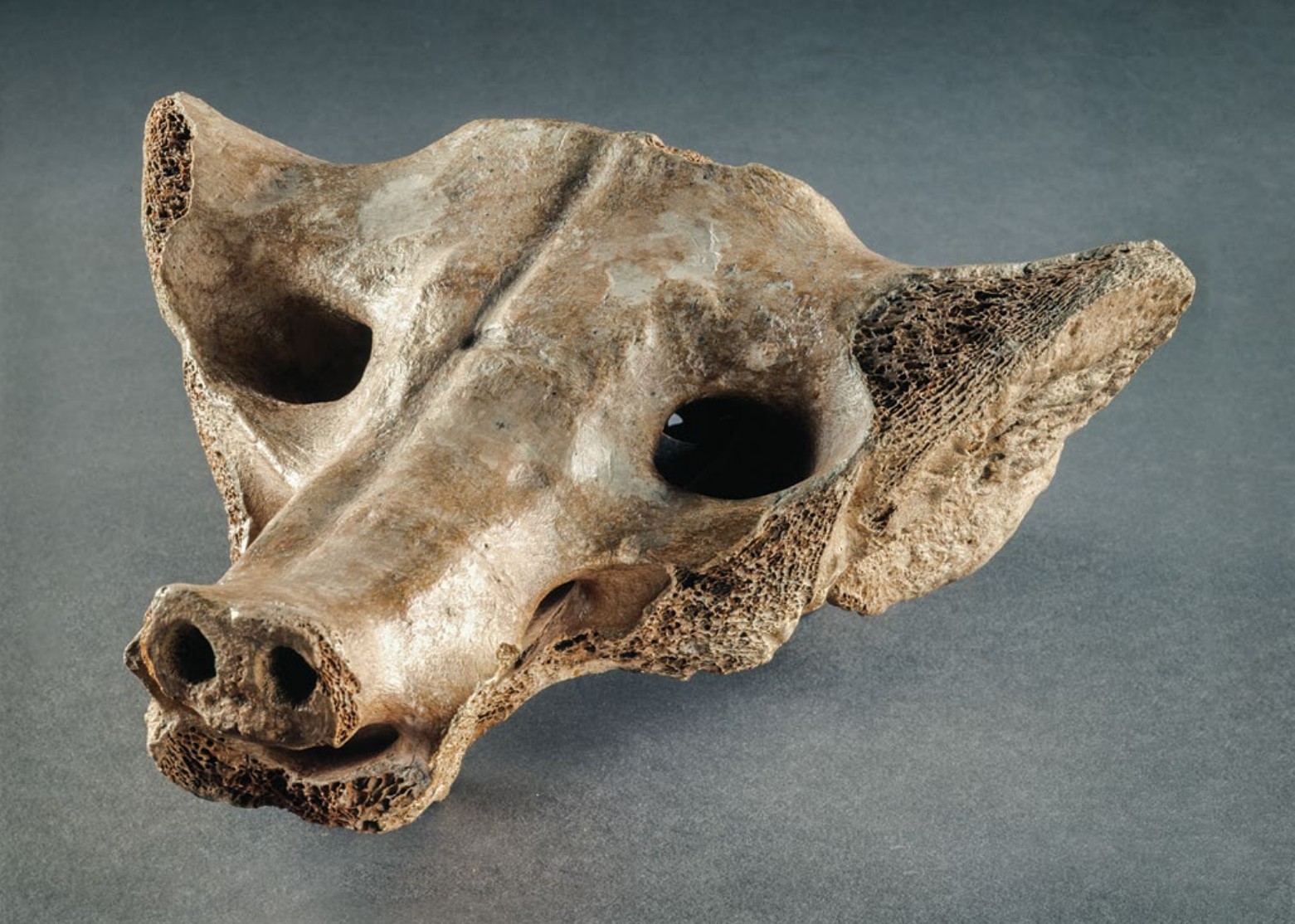
 Camelid sacrum, Photo © Jorge Pérez de Lara
Camelid Sacrum in the Shape of a Canine
Tequixquiac, Central Mexico. 14,000–7000 B.C.E. Bone.
Curator Note
"A sculpture made from the fossilized sacrum bone of a camelid, carved to look like the skull of a dog or wolf. It demonstrates early Mesoamerican reverence for the animal world."
Form
- Subtractive sculpture reserved from the fossilized sacrum bone of an extinct camelid (ancestor to llamas/camels).
- Skillful utilization of the bone's natural shape to suggest the head of a canine without extensive modification.
- Polished surface achieved through friction or tool use, indicating long-term care and handling.
- Nostrils and eyes were cut into the end of the bone to define the facial features.
- Symmetrical composition relying on the natural symmetry of the biological skeletal structure.
Function
- Likely a sacred object or mask used in shamanistic rituals or ceremonies.
- The sacrum bone is traditionally viewed as a "second skull" and seat of the soul/spirit in Mesoamerican culture.
- Deep connection to fertility and rebirth due to the sacrum's anatomical location near reproductive organs.
- Could have served as a totem for a clan or a hunting fetish.
- May have been used in rituals concerning the domestication of dogs or hunting of camelids.
Content
- Representation of a dog or wolf head, animals often associated with the underworld or guidance.
- Symbolizes the profound connection between humans and the animal world (transmutation).
- Transformation of a biological remnant (death) into a spiritual totem (life/spirit).
- The bone itself carries spiritual potency ("resurrection stone" concept in later cultures).
- Minimalist details focusing on the essence of the animal rather than hyper-realism.
Context
- Discovered accidentally in Tequixquiac, Central Mexico, in 1870 at a depth of 40 feet.
- One of the oldest known artifacts from the Americas (14,000–7000 B.C.E.), complicating timeline theories.
- Demonstrates the early presence of humans in the Valley of Mexico and their artistic interaction with local megafauna.
- Contextualizes the long tradition of bone carving and animal reverence in Pre-Columbian art.
- Reflects a hunter-gatherer society where every part of the animal was utilized and honored.