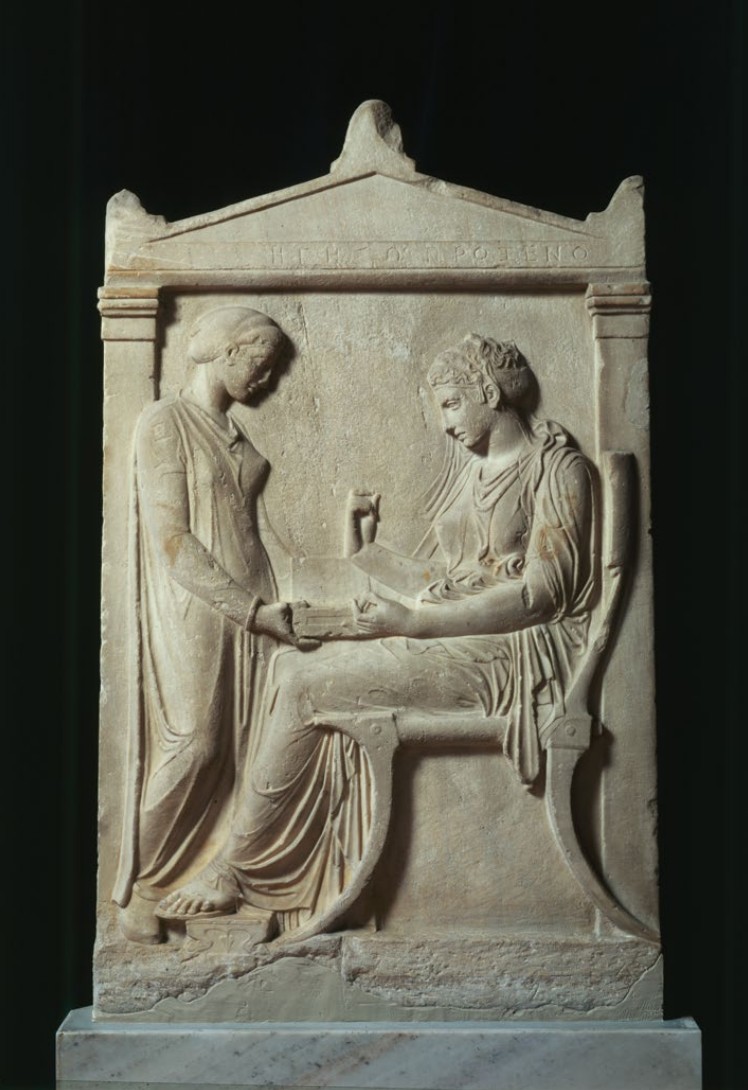
 Grave stele of Hegeso © Nimatallah/Art Resource, NY
Grave Stele of Hegeso
Attributed to Kallimachos. c. 410 B.C.E. Marble and paint.
Curator Note
"A private moment of domestic life frozen in stone. Hegeso inspects a piece of jewelry (originally painted), unaware of the viewer. It reflects the secluded lives of women in Classical Athens."
Form
- Marble stele (upright slab) carved in high relief.
- Architectural frame: Pilasters (side columns) support a pediment, mimicking a temple.
- Wet Drapery technique: The clothing clings to the body, revealing the female form underneath.
- Composition: Hierarchical (seated vs. standing) but connected through the gaze and the object.
- Serene, detached expressions ("Classical Calm") despite the context of death.
Function
- Funerary marker placed in the Dipylon cemetery (Kerameikos) in Athens.
- Commemorates the life of Hegeso, daughter of Proxenos.
- Status symbol: Displays the wealth of the family through the quality of the carving.
- Defines the deceased woman entirely by her domestic role and male relations (father/husband).
- Invites the viewer to pause and mourn the untimely death.
Content
- Hegeso (the deceased) seated on an elegant klismos chair, with feet on a footrest (status).
- A servant girl (smaller scale, simpler dress) stands before her holding a jewelry box (pyxis).
- Hegeso picks a necklace (originally painted, now missing) from the box.
- The scene depicts a typical domestic moment in the overarching seclusion of the women's quarters (gynaeceum).
- Inscription on the cornice: "Hegeso, daughter of Proxenos."
Context
- Created c. 410 B.C.E. (High Classical) towards the end of the Peloponnesian War.
- Marks a resurgence of private funerary sculpture after a state ban was lifted.
- Reflects the patriarchal society of Athens: Women were citizens but had no political rights.
- The focus on jewelry/dowry emphasizes her role in marriage and family alliances.
- Attributed to the sculptor Kallimachos due to the intricate drapery style.