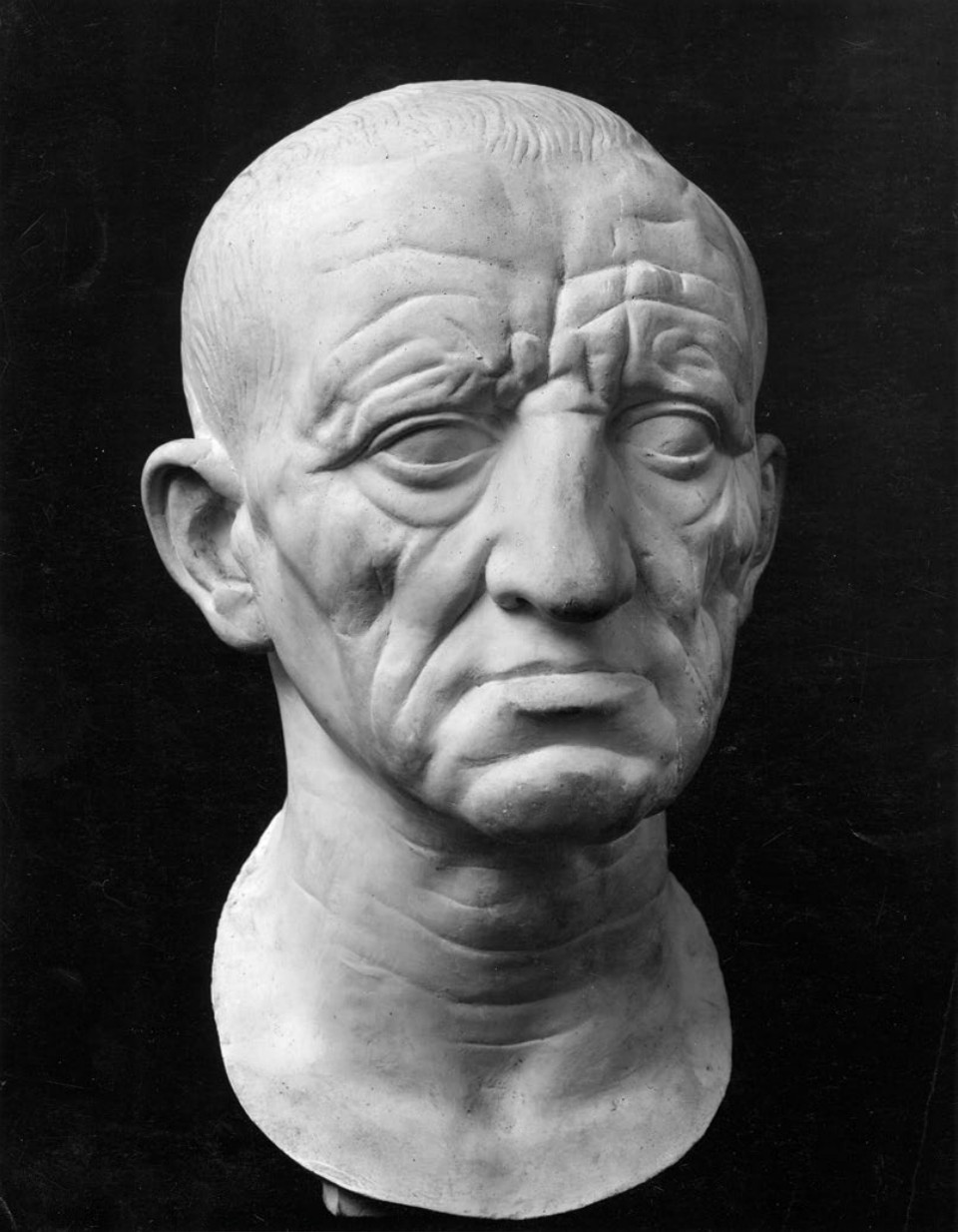
 Head of a Roman patrician © Alinari/Art Resource, NY
Head of a Roman Patrician
Republican Roman. c. 75–50 B.C.E. Marble.
Curator Note
"Every wrinkle is carved with pride. This "veristic" (hyper-truthful) style was a political statement—showing that the subject was grim, serious, and experienced enough to lead the Republic."
Form
- Marble bust (head and neck only), carved in the round.
- Verism ("Veristic Style"): Hyper-realistic, exaggerated depiction of age and facial features.
- Deep wrinkles, sagging skin, hook nose, and receding hairline.
- Frontal, serious, grim expression.
- Bust format (typical of Roman art, unlike Greek full-body statues).
Function
- Ancestral portrait (Imago) kept in the family shrine (atrium) of a Roman house.
- Paraded at funerals by family members to show lineage and status.
- Political statement: Displayed the values of the Roman Republic (Gravitas, Dignitas, Fides).
- Honored the subject's service to the state and experience.
- Propaganda: "I am old, therefore I am wise and trustworthy."
Content
- Portrait of an unidentified elderly Roman patrician (aristocrat).
- Lack of emotion suggests stoicism and serious intent.
- The "map of his life" is written on his face through wrinkles.
- No attempt to hide flaws; age was a badge of honor.
- Contrasts with the smooth, idealized perfection of Greek gods.
Context
- Roman Republic (c. 75–50 B.C.E.): A society ruled by the Senate (literally "Council of Elders").
- Patrician class: The ruling land-owning families of Rome.
- Verism was a reaction against the Greek tendency to idealize; Romans valued truth and heritage.
- Influenced by the tradition of making wax death masks of ancestors.
- As the Republic fell to the Empire, this style later gave way to Augustan idealism.