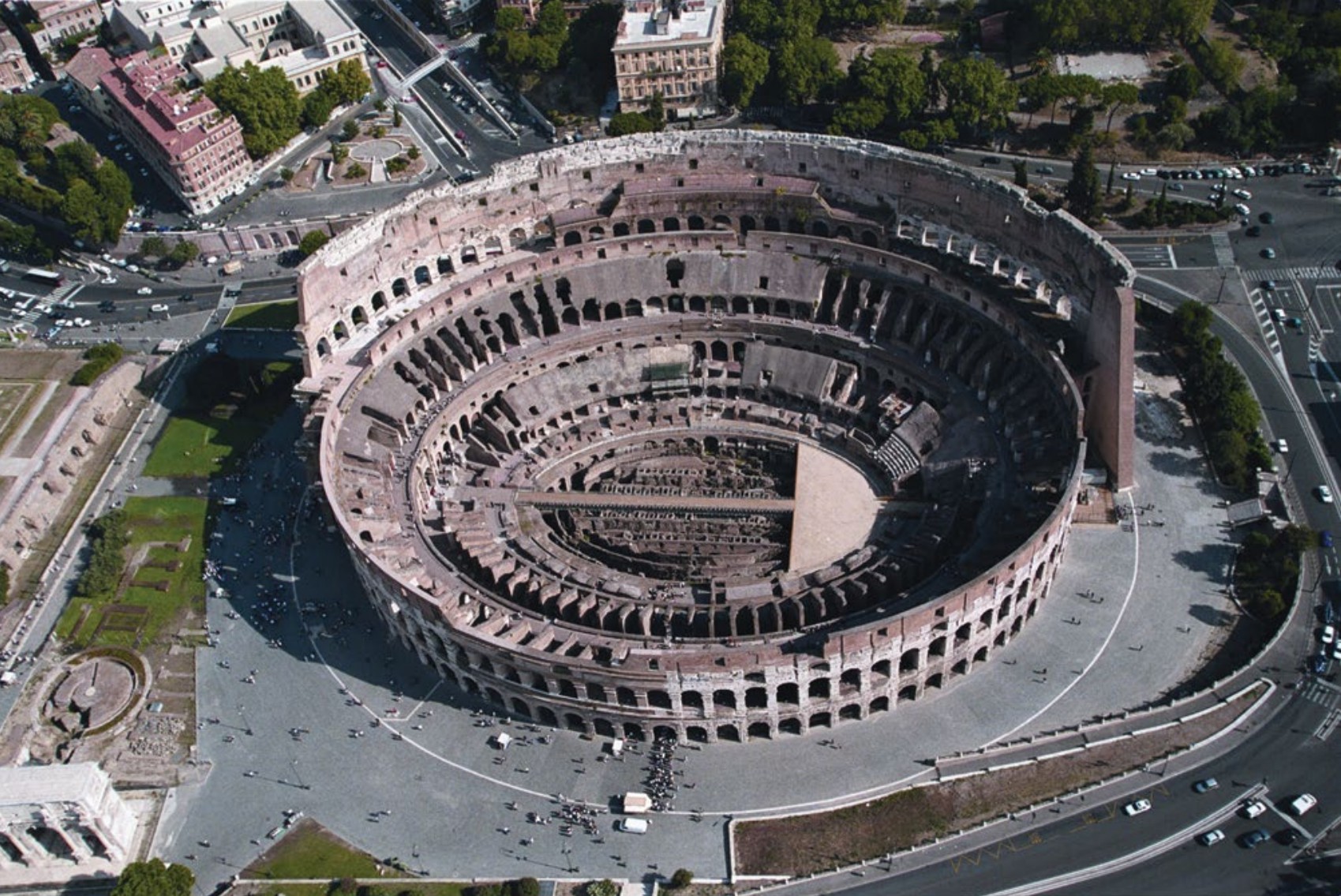
 Colosseum © Patrick Durand/Sygma/Corbis
Colosseum (Flavian Amphitheater)
Rome, Italy. Imperial Roman. 70–80 C.E. Stone and concrete.
Curator Note
"Built on the site of Nero's Golden House lake, this gift to the people could hold 50,000 spectators. It hosted gladiator fights, animal hunts, and mock naval battles to keep the populace entertained ("Bread and Circuses")."
Form
- Massive elliptical amphitheater built of concrete with stone/brick facing.
- Three levels of arcades featuring different orders: Tuscan (bottom), Ionic (middle), Corinthian (top).
- Complex system of barrel vaults and groin vaults to support the weight and crowds.
- Travertine limestone façade (quarried nearby).
- Originally covered by a Velarium (retractable awning) operated by sailors.
Function
- Public Entertainment Venue: Hosted gladiator fights, animal hunts, and executions.
- Political Tool: "Bread and Circuses" to keep the populace happy and distracted.
- Statement of Imperial Power: Built by the Flavians to reclaim the city for the people.
- Social Control: Seating was strictly segregated by social class (Senators, Knights, Plebeians, Women/Slaves).
- Hosted mock naval battles (naumachia) in its early days.
Content
- Arena (sand) floor covering the Hypogeum (underground).
- Hypogeum: Maze of tunnels, cages, and elevators for animals/gladiators.
- 76 numbered entrance gates (vomitoria) allowed 50,000 spectators to exit in minutes.
- Bronze shields and statues originally decorated the top level.
- Attic story features Corinthian pilasters.
Context
- Built by the Flavian Emperors (Vespasian and Titus) c. 70–80 C.E.
- Constructed on the site of Nero's artificial lake (Golden House), symbolically returning land to the public.
- Funded by the spoils of the Jewish War (Sack of Jerusalem).
- Concrete technology (Opus Caementicium) was the key to Roman architectural revolution.
- Later damaged by earthquakes and stone-robbers (used to build the Vatican).