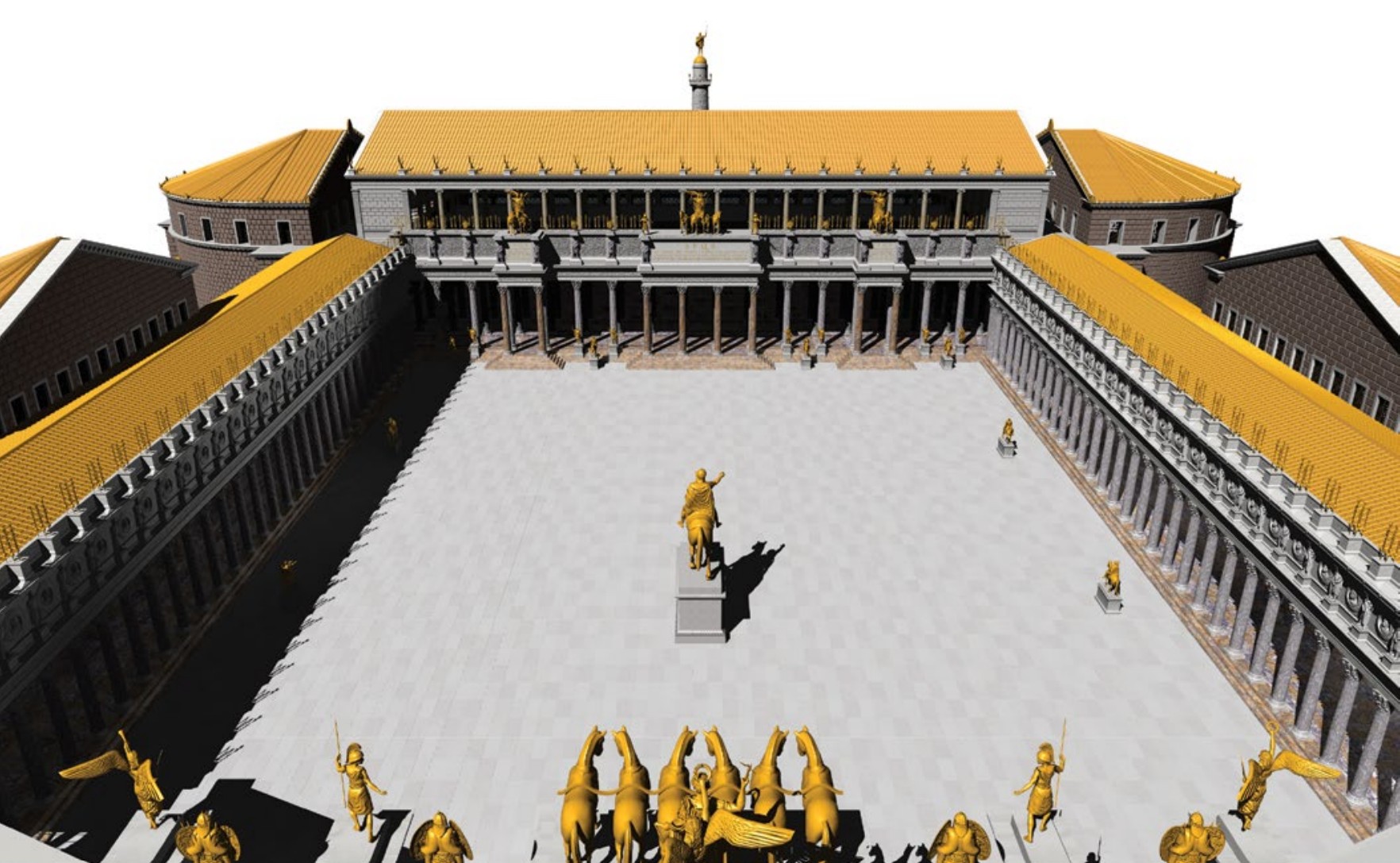
 Forum of Trajan (reconstruction drawing) © John Burge and James Packer
Forum of Trajan
Rome, Italy. Apollodorus of Damascus. Forum and markets: 106–112 C.E.; Column completed 113 C.E. Brick and concrete (architecture); marble (column).
Curator Note
"Paid for by the spoils of the Dacian Wars. It included a massive multi-story market complex (the first shopping mall) and a 125-foot column that tells the story of the war like a continuous film scroll."
Form
- Massive architectural complex using an Axial Plan.
- Basilica Ulpia: Huge hypostyle hall with apses on ends and clerestory lighting.
- Trajan's Column: 125-foot marble column with a continuous spiral frieze (625 feet long).
- Markets of Trajan: Multi-level commercial complex built into the hillside using concrete groin vaults.
- Decorative use of exotic marbles (yellow, purple) to show the reach of the empire.
Function
- Civic and Commercial Center: Law courts, libraries, shrines, and shops.
- Propaganda: Glorifies Emperor Trajan's victory over the Dacians (Romania).
- Burial Chamber: Trajan's ashes were placed in the base of the column (unusual for inside city).
- Public Space: Provided amenities and grandeur for the Roman citizens.
- Markets served as a distribution center for food and goods.
Content
- Column Frize: Detailed narrative of the two Dacian wars (logistics, marching, building, fighting).
- Trajan appears 58 times, always leading or overseeing.
- Statue of Trajan (now St. Peter) originally topped the column.
- Libraries: One for Greek scrolls, one for Latin scrolls, flanking the column.
- Equestrian Statue of Trajan in the center of the forum courtyard (now lost).
Context
- High Imperial Rome (c. 106–112 C.E.): The empire reached its greatest geographic extent.
- Designed by Apollodorus of Damascus, Trajan's chief military engineer.
- Paid for by the immense gold and silver loot from Dacia.
- Trajan was known as "Optimus Princeps" (Best Emperor).
- The markets are often called the "first shopping mall" in history.