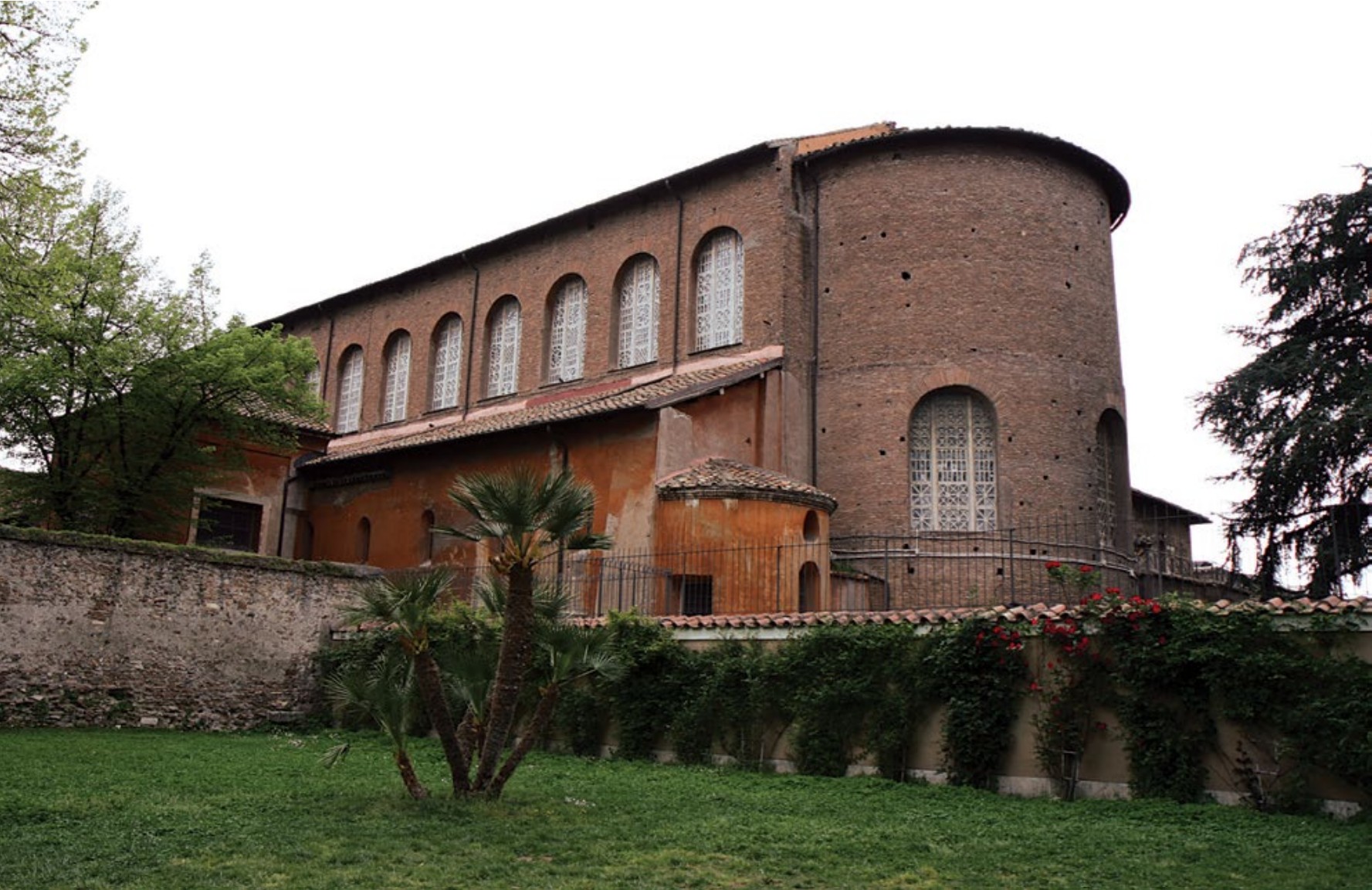
 Santa Sabina © Holly Hayes/Art History Images
Santa Sabina
Rome, Italy. Late Antique Europe. c. 422–432 C.E. Brick and stone, wooden roof.
Curator Note
"One of the best-preserved early Christian basilicas, maintained in its original form. It adapts the Roman civic basilica plan (law court) for religious use, shifting the focus from the emperor to the altar. The modest exterior contrasts with the luminous, spiritual interior, symbolizing the Christian soul."
Form
- Basilica plan: longitudinal axis, nave, side aisles, apse.
- Plain brick exterior (spolia).
- Corinthian columns repurposed from a pagan temple (spolia).
- Timber roof (unvaulted) and clerestory windows.
- Light and airy interior creating a spiritual atmosphere.
Function
- Early Christian church for public worship (liturgy).
- To house the congregation (ecclesia).
- To separate the baptized (nave) from the unbaptized (narthex).
- To direct attention to the altar and apse.
- To symbolize the triumph of Christianity over paganism.
Content
- Carved wooden doors depicting biblical scenes (Crucifixion).
- Clerestory windows illuminate the nave (light = divinity).
- The apse mosaic (original lost) represented Christ.
- Colonades create a rhythm leading to the sanctuary.
- Emphasis on spiritual rather than physical weight.
Context
- Built shortly after the Visigoth sack of Rome (410 C.E.).
- Christianity had become the official religion (Edict of Thessalonica).
- Located on the Aventine Hill.
- Represents the survival of Roman architectural knowledge.
- Influenced the design of churches for centuries.