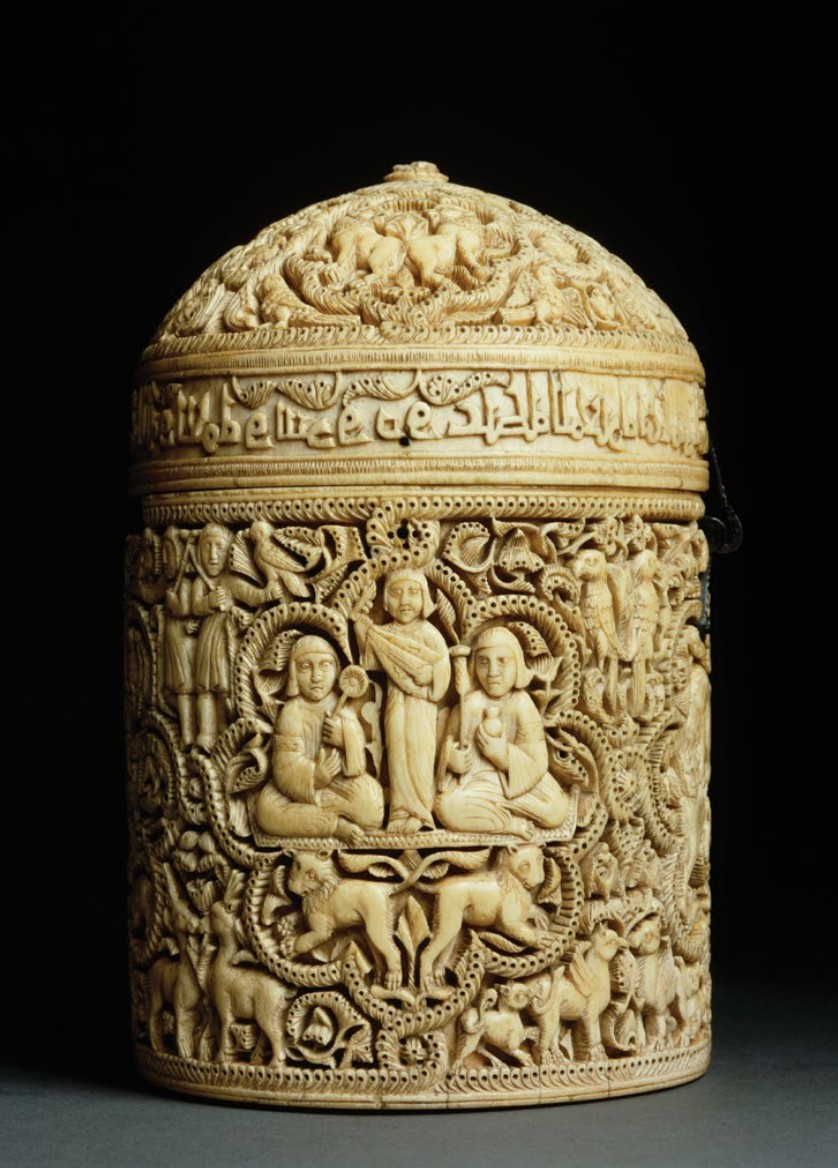
 Pyxis of al-Mughira © RMN-Grand Palais/Art Resource, NY
Pyxis of al-Mughira
Umayyad. c. 968 C.E. Ivory.
Curator Note
"A luxury container carved from a single elephant tusk. It was a coming-of-age gift for al-Mughira, the younger son of a Caliph. The intricate carving portrays four medallions with scenes of royal leisure and power (hunting, music), serving as a political message about lineage and legitimacy."
Form
- Cylindrical box with a hemispherical lid.
- Carved from solid ivory.
- Deep relief carving with high detail.
- Four eight-lobed medallions.
- Kufic script inscription around the rim.
Function
- A container for aromatics/perfumes.
- A gift for the prince al-Mughira (son of Caliph).
- Political propaganda asserting Umayyad legitimacy.
- Display of courtly wealth.
- To hold cosmetics.
Content
- Medallion 1: Two men collecting eggs from falcons (symbol of legitimacy).
- Medallion 2: Lute player and figures with fans (court life).
- Lions attacking bulls: symbol of victory/power.
- Inscription: blessings for al-Mughira.
- Vegetal motifs (arabesques) filling space.
Context
- Created in the royal workshops of Madinat al-Zahra.
- Ivory was a highly prized, durable material.
- Islamic art generally avoids figures in religious contexts, but this is secular.
- The Umayyads were rivals to the Abbasids in Baghdad.
- Al-Mughira was eventually executed.