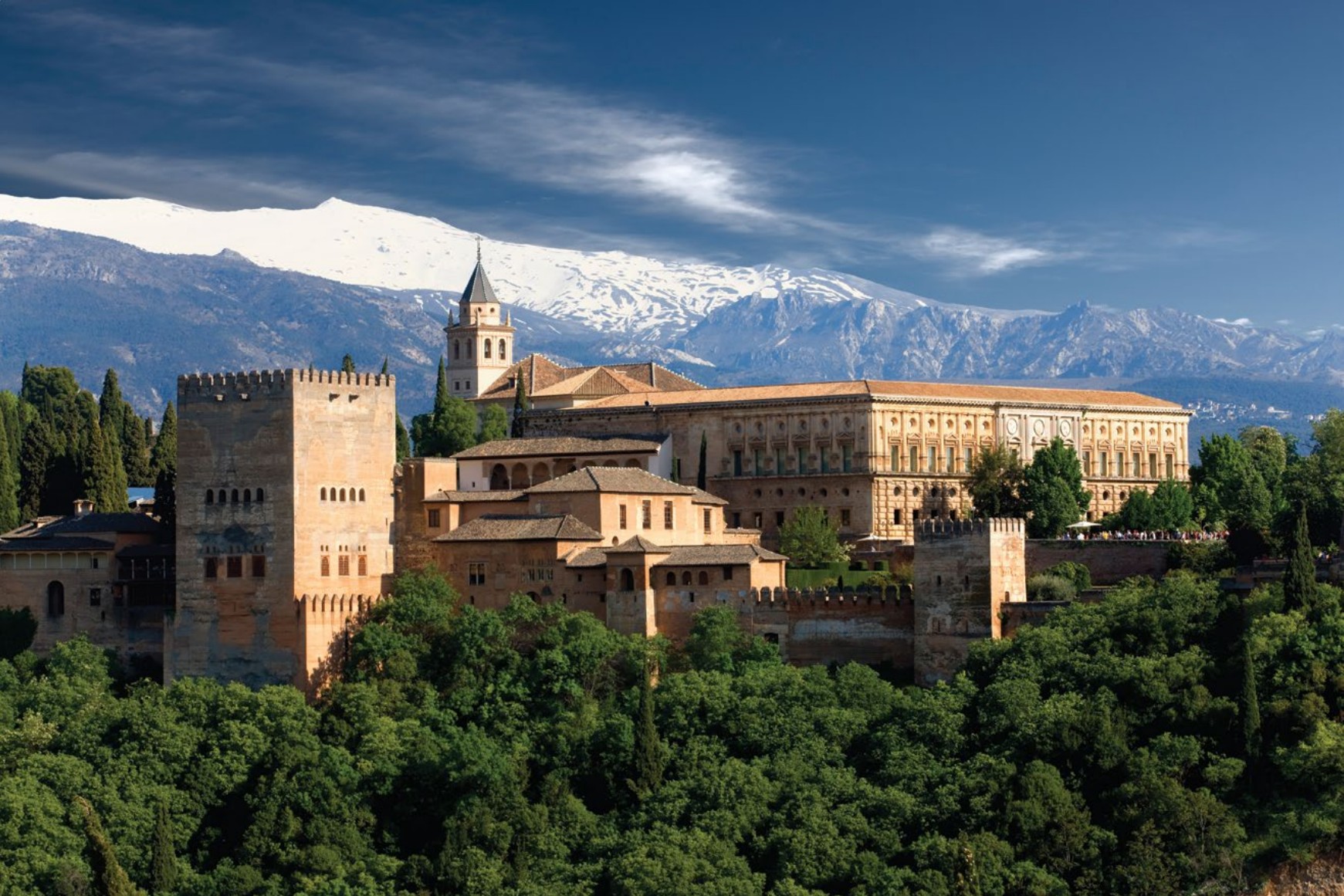
 Alhambra © Visions Of Our Land/The Image Bank/Getty Images
Alhambra
Granada, Spain. Nasrid Dynasty. 1354–1391 C.E. Whitewashed adobe stucco, wood, tile, paint, and gilding.
Curator Note
"The "Red Fort," the last Muslim stronghold in Spain. It is a palace-city celebrating the refinement of the Nasrid dynasty. The architecture dissolves matter into light with intricate stucco (muqarnas), tilework, and water features. It was intended to create a "paradise on earth.""
Form
- Complex of palaces, gardens, and forts.
- Intricate stucco carved walls (horror vacui).
- Muqarnas (honeycomb vaulting) reflecting light.
- Water features (fountains/pools) integrate indoor/outdoor.
- Thin columns and airy, open courts.
Function
- Residence of the Nasrid Sultans.
- Administrative center (citadel).
- Barracks for elite guard.
- To represent Paradise (Jannah).
- To intimidate and impress ambassadors.
Content
- Court of the Lions: Fountain supported by 12 lions.
- Hall of the Two Sisters: Dome of muqarnas (5000+ cells).
- Generalife: Summer palace and gardens.
- Calligraphy: "Only God is Victor" repeated.
- Geometric tile patterns.
Context
- Built by the last Muslim dynasty in Spain (Nasrids).
- Granada fell to Ferdinand and Isabella in 1492.
- Preserved by Christians as a trophy of conquest.
- Calculated geometry used for beauty.
- Washington Irving wrote "Tales of the Alhambra" here.