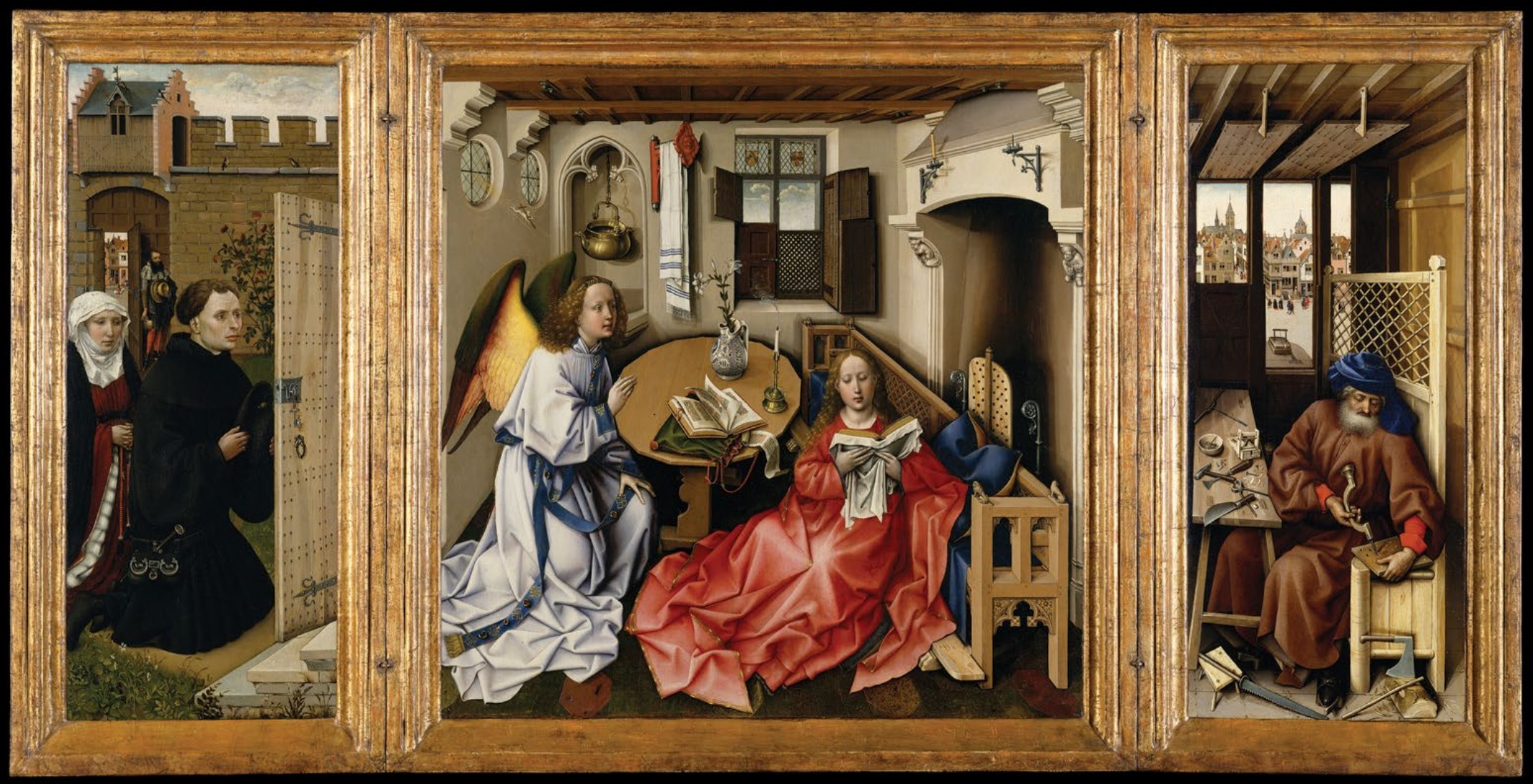
 Annunciation Tiptych Image © The Metropolitan Museum of Art/Image source © Art Resource, NY
Annunciation Tiptych (Merode Altarpiece)
Workshop of Robert Campin. 1427–1432 C.E. Oil on wood.
Curator Note
"A masterpiece of the Northern Renaissance using the new medium of oil paint. It depicts the Annunciation (Angel Gabriel appearing to Mary) taking place in a typical Flemish middle-class living room. The painting is packed with "disguised symbolism"—everyday objects that hold religious meaning."
Form
- Triptych (three panels) with hinges.
- Oil paint allowing for extreme detail and glowing color.
- Realism of textures (wood, metal, fabric).
- Steep perspective (table tilts up).
- Cramped, intimate space.
Function
- Private devotional altarpiece for a home.
- To aid in prayer.
- To humanize religious events.
- To record the donors (Ingelbrecht family).
- Status symbol.
Content
- Center: Annunciation in a Flemish home.
- Left: Donors kneeling in a garden (Hortus Conclusus).
- Right: Joseph in his carpentry shop.
- Symbols: Lilies (purity), extinguished candle (God enters), mouse trap (Christ traps the devil).
- Tiny baby Christ flying in with a cross.
Context
- Northern Renaissance interest in domestic detail vs. Italian interest in anatomy.
- Rise of the merchant class (bourgeoisie) patrons.
- Robert Campin = Master of Flemalle.
- Use of oil paint revolutionized realism.
- Flemish cities were wealthy textile hubs.