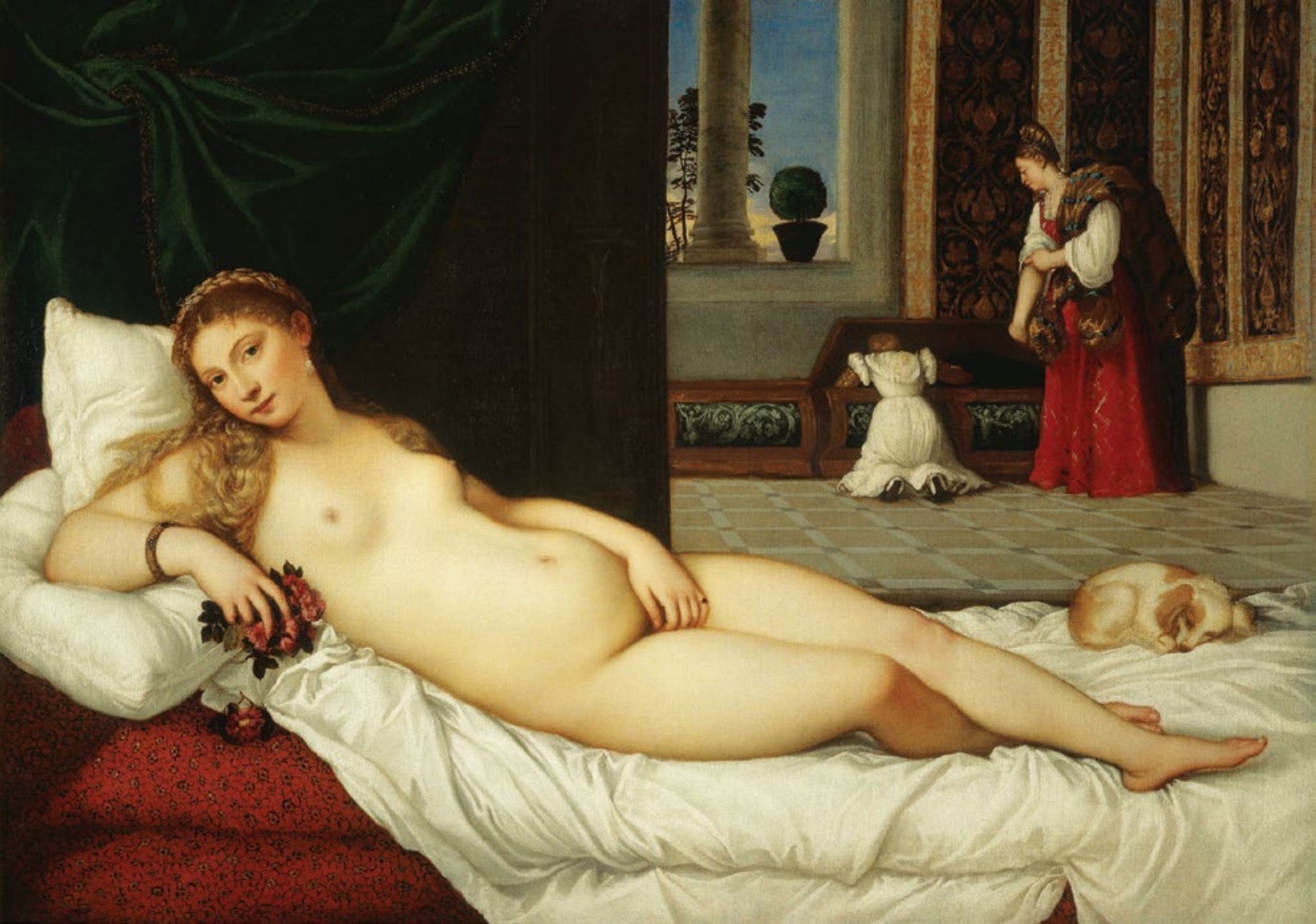
 Venus of Urbino © Scala/Ministero per i Beni e la Attività culturali/Art Resource, NY
Venus of Urbino
Titian. c. 1538 C.E. Oil on canvas.
Curator Note
"A celebration of female beauty and marital sexuality. Titian depicts a nude woman (conventionally called "Venus" to make it acceptable) reclining on a bed in a contemporary Venetian palace. Her direct, inviting gaze challenges the viewer. It established the standard for the "reclining nude" genre."
Form
- Venetian style: emphasis on color and light (colorito) over line (disegno).
- Oil on canvas (texture, glazing).
- Soft, glowing skin tones.
- Diagonal composition divides the space.
- Background depth (servants in the back).
Function
- "Cassone" image (marriage chest) or private erotic art for the Duke of Urbino.
- To celebrate a marriage (fidelity symbology).
- To provide visual pleasure.
- Didactic model for a wife (be sexual for husband).
- Display of wealth (palace setting).
Content
- Nude woman (Venus) looking at viewer.
- Dog at feet: Fidelity (Fides).
- Servants looking in chest: gathering clothes (dowry?).
- Roses: love.
- Myrtle plant: marriage.
- Hand placement: suggestive.
Context
- Titian was the master of the Venetian school.
- Venice was a wealthy, hedonistic republic.
- Inspired Manet's Olympia (but Olympia rejects the male gaze).
- The title "Venus" was added later to justify the nudity.
- The model might be a courtesan or the Duke's wife.