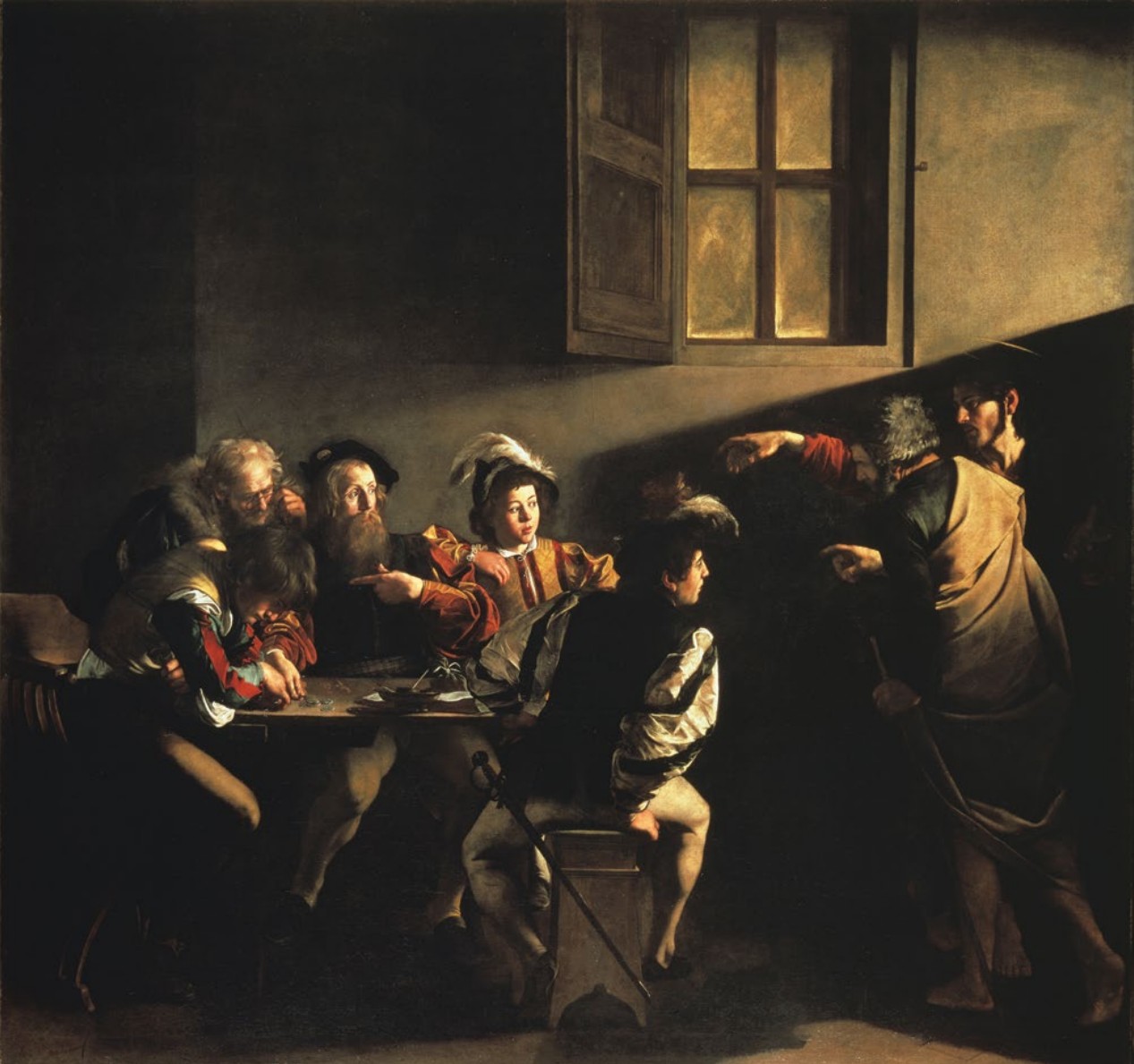
 Calling of Saint Matthew © Scala/Art Resource, NY
Calling of Saint Matthew
Caravaggio. c. 1597–1601 C.E. Oil on canvas.
Curator Note
"A revolutionary Baroque painting. Caravaggio sets a biblical miracle in a dingy, contemporary Roman tavern. Christ points at Matthew (a tax collector) with a beam of light, summoning him. The extreme chiaroscuro (Tenebrism) and the gritty realism (dirty feet, greed) make the divine enter the everyday world with shocking force."
Form
- Tenebrism (violent contrast of light and dark).
- Naturalism/Realism (contemporary clothes, unidealized faces).
- Diagonal composition (light beam and Christ's arm).
- Void in the center.
- Oil on canvas.
Function
- Decoration for the Contarelli Chapel in San Luigi dei Francesi.
- To depict the life of St. Matthew.
- To bring the biblical story into the viewer's reality.
- Counter-Reformation: God calls sinners directly.
- To establish Caravaggio's reputation.
Content
- Christ: hidden in shadow, faint halo, hand gesture mirrors Adam (Michelangelo).
- Matthew: pointing at himself ("Who, me?").
- Tax collectors: focused on money (greed).
- The Light: Divine grace.
- Window: blocked (light comes from "outside" source).
Context
- Caravaggio was a rebel and murderer.
- Painted for the French church in Rome.
- Critics hated his "vulgarity" but loved his technique.
- Initiated the Baroque style.
- Reflects the Catholic focus on conversion.