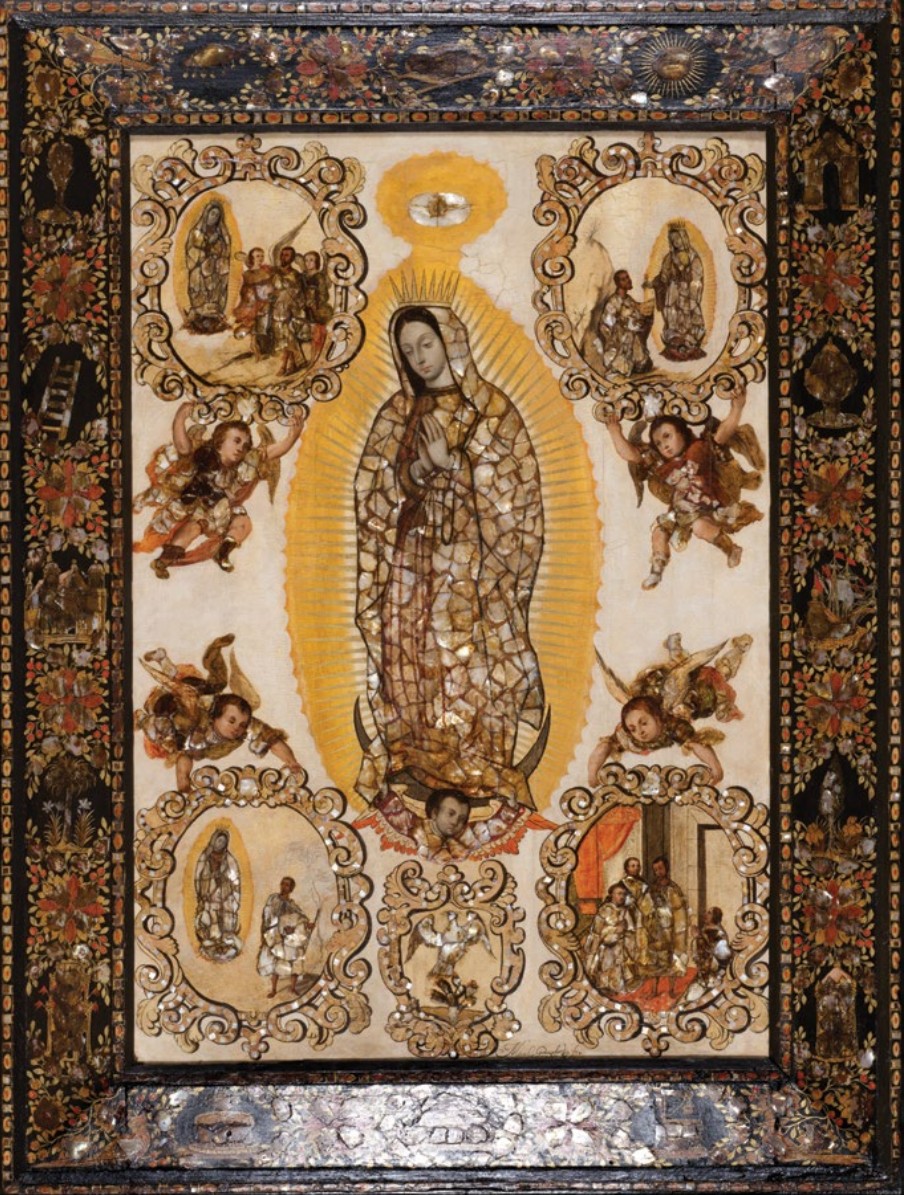
 The Virgin of Guadalupe Digital Image © 2011 Museum Associates/LACMA. Licensed by Art Resource, NY
The Virgin of Guadalupe (Virgen de Guadalupe)
Miguel González. c. 1698 C.E. Based on original Virgin of Guadalupe. Basilica of Guadalupe, Mexico City. 16th century C.E. Oil on canvas on wood, inlaid with mother-of-pearl.
Curator Note
"The most revered image in Mexico. Based on the miraculous apparition of the Virgin Mary to inevitably indigenous peasant Juan Diego in 1531. She appears as an indigenous woman (dark skin), speaking Nahuatl. This "enconchado" copy celebrates her as the patroness of New Spain, uniting Spanish and Indigenous cultures."
Form
- Enconchado (mother-of-pearl inlay).
- Iconic imagery (mandorla/rays of sun).
- Dark skin tone ("La Morenita").
- Ornate border with roundels.
- Oil on canvas/wood.
Function
- Devotional image.
- To commemorate the apparitions.
- To assert a distinct Mexican identity (Criollismo).
- To aid in converting indigenous people.
- Export product.
Content
- Virgin standing on a crescent moon (Rev 12:1).
- Angel holding her up.
- Roundels depict the story of Juan Diego and the roses.
- Eagle on cactus: Symbol of Mexico City.
- Crown: Queen of Heaven.
Context
- Miracle of the Tilma (cloak) in 1531.
- Virgin became the symbol of Mexican Independence later.
- Asian influence in the shell inlay.
- Replaced the Aztec goddess Tonantzin on the same hill.
- Badge of identity for Creoles.